What to Expect on Your Child’s Literacy Journey
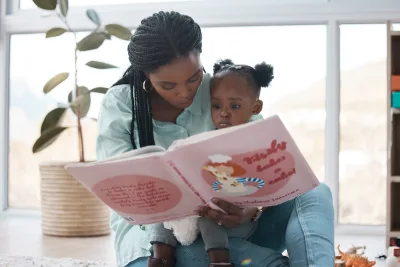
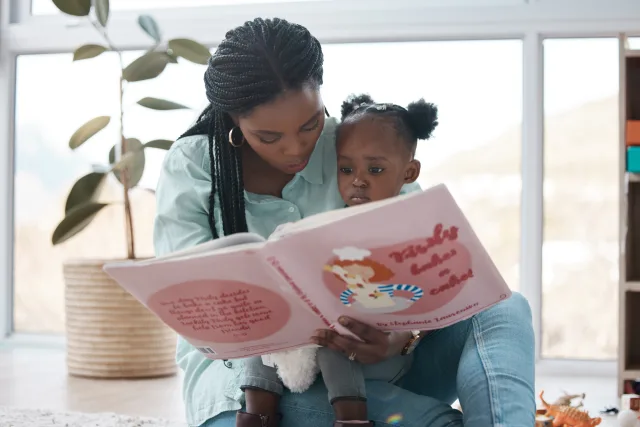
Every child grows at their own pace, but common milestones can help guide parents and caregivers as they support language and early reading.
Remember, kids develop on different timelines. If your child doesn’t reach a milestone right away, it doesn’t always mean something is wrong. If you’re unsure, trust your gut and talk with your pediatrician. They can let you know if your child is on track or may need extra support. Families in Indiana can also use free programs like First Steps for help.
Below is a simple guide to literacy milestones from birth to age five, with tips on what to look for and how to support your child at each stage.
Birth to 12 Months
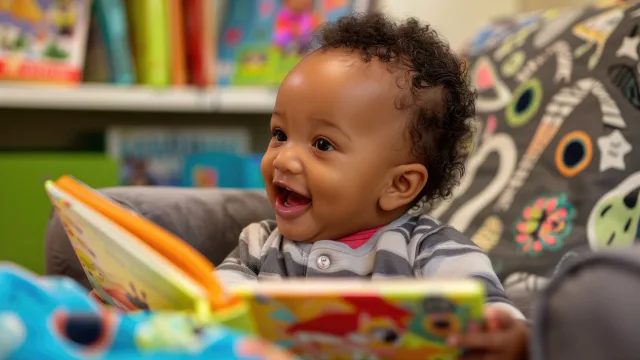
Your baby is soaking up the world through sounds, faces and voices. Even before they say a single word, they’re learning language through every cuddle and coo.
What to Expect:
- Turns head toward sounds or familiar voices.
- Makes cooing and babbling sounds.
- Looks at your face while you talk or sing.
- Shows interest in books by looking, mouthing or grabbing.
How You Can Help:
- Describe what you see and do throughout the day.
- Make eye contact and respond to babbles.
- Read board books with bright pictures and simple words.
- Sing lullabies and nursery rhymes.
When to Check in With Your Pediatrician:
- Talk to your pediatrician or a developmental specialist of your baby isn’t responding to sounds or vocalizing by 6–9 months.

1 to 2 Years
Toddlers are discovering how powerful words can be and they’re eager to use them. This is when many children go from saying a few words to dozens.
What to Expect:
- Uses simple words like “mama,” “dog” or “bye-bye.”
- Points to objects or pictures when named.
- Enjoys short stories, songs and rhymes.
- Begins to label things and name familiar people or objects.
How You Can Help:
- Repeat and expand on what your child says, like, “Yes, that’s a big brown dog.”
- Let your child turn pages and point to pictures while reading.
- Use daily routines like bath time or grocery trips to build vocabulary.
When to Check in With Your Pediatrician:
- Talk to your pediatrician or a developmental specialist if your toddler isn’t using at least 10–20 words or isn’t responding to simple directions.

2 to 3 Years
This is the age of “Why?” Your child is beginning to ask questions, express thoughts and tell stories, building early literacy skills without even realizing it.
What to Expect:
- Uses 2- to 3-word sentences.
- Names familiar books and fills in parts of favorite stories.
- Begins to understand books have meaning and print is important.
- Pretends to read favorite books from memory.
How You Can Help:
- Encourage pretend reading to build confidence.
- Ask open-ended questions during reading and wait for their response.
- Introduce basic concepts like colors, letters and opposites in playful ways.
When to Check in With Your Pediatrician:
- Seek a language evaluation if your child’s speech is very hard to understand or if they struggle to combine words by age 3.

3 to 4 Years
Preschoolers are natural storytellers. They’re starting to understand how stories work and letters represent sounds.
What to Expect:
- Retells familiar stories with beginning, middle and end.
- Recognizes and names some letters.
- Understands rhyming and beginning sounds like “B is for ball.”
- Asks lots of questions and uses full sentences.
How You Can Help:
- Play with rhyming words and silly sounds.
- Point out letters in signs, food boxes and clothes.
- Keep reading a variety of books including fiction, nonfiction and poems.
When to Check in With Your Pediatrician:
- Seek a language evaluation if your child shows little interest in stories or books or struggles to understand basic language.

4 to 5 Years
Your child is almost ready for school and they’re showing strong pre-reading skills. At this age, early literacy habits can really take flight.
What to Expect:
- Recognizes many letters and the sounds they make.
- Writes some letters or their name.
- Rhymes, retells stories and recognizes sight words.
- Understands how to read a book.
How You Can Help:
- Encourage writing and drawing daily.
- Keep a consistent bedtime reading routine.
- Let your child read to you, even if they’re making it up.
When to Check in With Your Pediatrician:
- Get support if your child struggles to follow stories, remember letter names or has difficulty expressing themselves clearly.

Not sure what to do?
If you ever have concerns about your child’s development, start by talking to your pediatrician. You can also find free local resources through Brighter Futures Indiana or First Steps.
Learn more about First Steps
Every Page Counts. Every Moment Matters.
Help your child build a strong foundation for a lifetime of learning – starting with a story today.
Turn the page