
Your Childcare, Your Choice
Find the best childcare for your family.

Choosing childcare is one of the most important decisions your family will make – and there’s no one-size-fits-all answer. Every family’s needs, values and schedules are different. Whether you’re looking for flexible hours, a specific program setting, support for your child’s learning or peace of mind around health and safety, you deserve clear, trustworthy information to guide your choice. Explore your options, learn more about what matters most to you and find childcare that fits your family’s needs.

Let's Explore
Different Childcare Environments and Priorities Below

Program type
There are six different types of childcare in Indiana, including three types of licensed or regulated care: child care centers, religious ministries and in-home childcare programs. Many school-based programs are licensed or regulated as well. Family, friend and neighbor (FFN) care, while not licensed or regulated, is used in some capacity by approximately a third of Hoosier families according to recent research. While each program offers its own unique benefits based on the type of setting, in general:
- Childcare centers provide a structured school-like environment where children are educated in classrooms with their peers.
- Religious ministries offer care in line with spiritual values and practices, often in settings that reflect a formal school experience.
- In-home child care programs, sometimes called family childcare homes, deliver personalized, smaller care settings where children can learn alongside peers of all ages.
- School-based programs most often meet the needs of before- and after-school care, providing activities and homework help for children aged 6+.
- Legally license exempt programs (LLEPs) follow different regulations than licensed or regulated programs, and they often offer extended care hours or follow school curriculum.
- Family, friend and neighbor (FFN) care offers flexibility and familiarity with a known caregiver without safeguards from licensing regulations.
Click here to dive deeper into the various types of care and how they are regulated.

Cost
There’s no way around it: childcare is expensive! Cost can vary based on the type of care you select, the Paths to QUALITY™ level of your preference, the county you need care and the age of your children. Complicated, right? We break down the average cost of care and highlight some resources to help pay for it on our blog.

Flexible Hours/Days
Whether you’re working 9 to 5, overnights, 24-hour shifts or just a few days a week, it can be challenging to find care that meets the hours and days you need. This becomes trickier when your schedule is variable, or if some days you need to stay a few minutes later than usual.
Most childcare programs operate between 6 a.m. and 6 p.m., Monday through Friday. Some offer second-shift or weekend care. Fewer offer third-shift or overnight care. Many charge fees for picking up late, too. How do you navigate searching for care, especially if you work variable or nontraditional hours?
As of December 2025, 28% of childcare programs statewide offered extended or overnight hours, and 10% offered weekend hours. Search the Brighter Futures Indiana Data Center or Early Learning Marketplace to find programs in your area. To narrow your search, select the number of days and hours you will need each week. You can also contact the OECOSL Childcare Support Line and they will conduct a personalized search for care. When you call and tour programs, ask if they charge a fee for picking your child up late, or if you can change the days you bring your child each week. Ask the hard questions up front so neither you nor your provider are surprised later.
If regulated care does not meet your needs, family, friend and neighbor (FFN) care might be a better fit. In a 2025 study, Hoosier families indicated that FFN care was more adaptable to irregular work schedules. If family and friends aren’t an option, consider asking your coworkers who they use or search on Google or Facebook for programs that may have more flexible scheduling.

Location
“Location, location, location,” is not just true in real estate. Most families want to find childcare near their home, work or school.
In some places, finding care close to you won’t be too difficult; there may be plenty of programs in your area and it’s just a matter of choosing the best one for your family. In other places, there are fewer programs within a few miles of your house or place of employment, and finding nearby care is harder.
To find an opening at a convenient location, start the search early. Specialists at the OECOSL Childcare Support Line can conduct a personalized search for you within a certain distance of your home, work or school. The Early Learning Marketplace allows you to conduct this kind of search on your own, and Child Care Finder features a tool where you can search for care along your route from home to work or school. Check out our page on finding childcare for more details on these options.

Quality Learning
We know from recent research that families want several characteristics in high-quality childcare programs. Cleanliness, security and attentiveness to children's needs are foundational items for children's health and safety. Additionally, families identified affordability, flexible hours and support for children with disabilities as important factors in their childcare decisions. And families can't forget about the important role quality care plays in supporting children's cognitive, emotional and physical growth, development of self-help skills and school readiness. So, what exactly does quality look like?
Quality childcare looks different for different families, and quality can show up in different ways, too. Paths to QUALITY is Indiana’s quality rating and improvement system for childcare where programs progress through four levels, each building on the last. It can often serve as a starting point for identifying a quality program. But quality is so much more than a number. Check out the following articles to learn more about quality care for your family:
- What do Indiana Families Want in Quality Childcare?
- What Is “High-Quality” Childcare?
- Identifying Quality Care
What does a high-quality program look like?
No matter the program you choose, consistent attendance increases the quality of your child’s experience. Learn more on our blog!
Language Needs
When your family speaks another language, choosing childcare can be particularly complicated. Aside from logistical tips like using a translation app to communicate and access paperwork, what else should you consider in care?
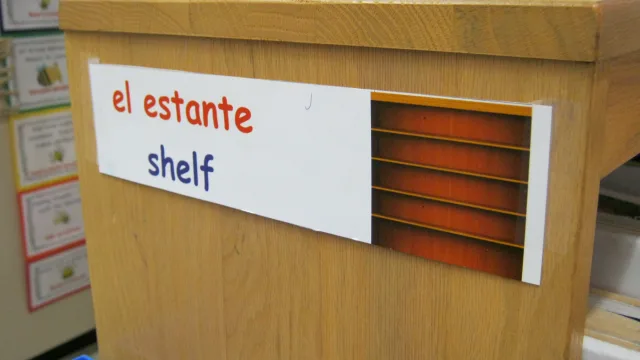
Look for bookshelves with stories in other languages. Notice whether children are free to play in their own languages. Observe whether various parts of the classroom are labeled with visuals and translations. Reflect on how you feel in the space. Do you feel welcome?
Share your child’s and your family’s needs. What does your child do well? What helps them feel comfortable? What foods or practices should your child care provider know? These questions and more will help you form a partnership that lasts.
Multilingualism at an early age leads to skills that will support your child (and their peers) for life. To learn more about finding a program when your child speaks another language, check out our blog on Multilingualism in Childcare.

Special Needs Support
Whether your child benefits from learning accommodations or needs a G-tube or wheelchair access, finding care that supports your child’s needs can feel overwhelming. If your child has special learning or health needs, it’s vital to find a program that will support them.
Access, participation and supports are all part of inclusive childcare. Children with disabilities have rights to high-quality care, legal protections, community belonging and respect. As a parent or guardian, you are your child’s first and best advocate. Learn about your child’s educational and behavioral needs so you can share what you know. Ask questions of potential childcare providers to find out how they will support your child. Share what your child likes and doesn’t like, what she’s good at and what you hope she will learn in care. Reach out to organizations like IN*SOURCE, Easterseals and Family to Family for support.
Choosing a program for your child with a disability is possible, and our resources are here to help.
Values All Children
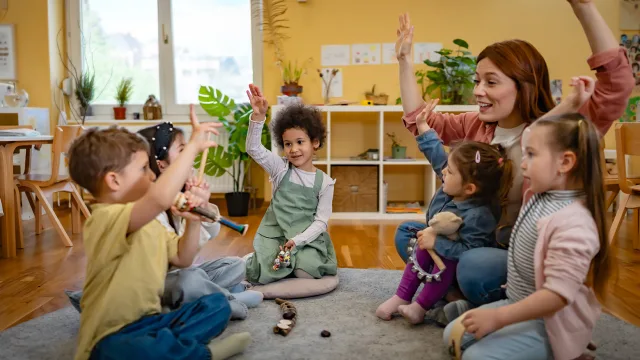
Each person, family and community is different, and this uniqueness makes life beautiful. Childcare programs that embrace and value all families help children see goodness in themselves, their peers and the world around them. A quality program assists children in understanding and growing their identities, embracing children unlike themselves, expressing empathy in unjust situations and acting to support their friends.
Programs that welcome and nurture all children have books showing characters and authors from different backgrounds. They honor and celebrate holidays that are meaningful in different traditions. These programs are intentional about varied food and language needs. They are warm and inviting to every family and help children grow up curious and kind. What does it look like to embrace differences in childcare? Check out our blog!

Health and Safety
Health and safety are often a family’s first priority in their child’s care, and there are several factors to keep in mind. When searching for a program, note whether there are enough caregivers to monitor and attend to each child. Look for and ask about safe sleep practices. Take note of security procedures such as locked entrances and protocols that keep medicines and cleaning supplies out of reach. Observe whether emergency plans are posted. Make sure cleaning practices like handwashing and disinfecting occur regularly. And look for support for the development and well-being of all children.
Before you tour a program, check Child Care Finder, the Office of Early Childhood and Out-of-School Learning’s self-service tool for child care. There you will find health and safety inspection reports on all regulated programs. If anything stands out to you from the reports, ask the provider for clarification. To learn more, check out our Health and Safety Checklist and bring it with you on your tour.

Philosophy
“Where would my child thrive?” Questions like this one drive your exploration of child care philosophies. You could research Montessori’s self-guided learning or Waldorf’s free-thinking approach, but what matters most, perhaps, is not the name of the philosophy, where it began or the theories behind it, but instead how childcare providers see children and learning and whether your family and your child feel comfortable in the program environment. Early childhood experts spend decades learning about child care philosophies with so much still to uncover. If you’re looking to make your childcare choice soon, consider questions you might ask to determine if a program will nurture your child’s strengths and interests for meaningful growth and development. For a helpful list of questions, check out our blog, Philosophies Behind Caring for Children.
Blogs

Choice
Breaking Down the Average Cost of Child Care in Indiana
Are you struggling to pay for child care? If so, you’re not alone. Child care prices climbed nearly 40%...
Read More